Choosing the right spray technique is essential for a smooth, professional paint finish. Airless and air-assisted spraying are two popular methods for applying wall paint. What are their differences, advantages and drawbacks? This article compares both methods to help you choose the right one for your project.
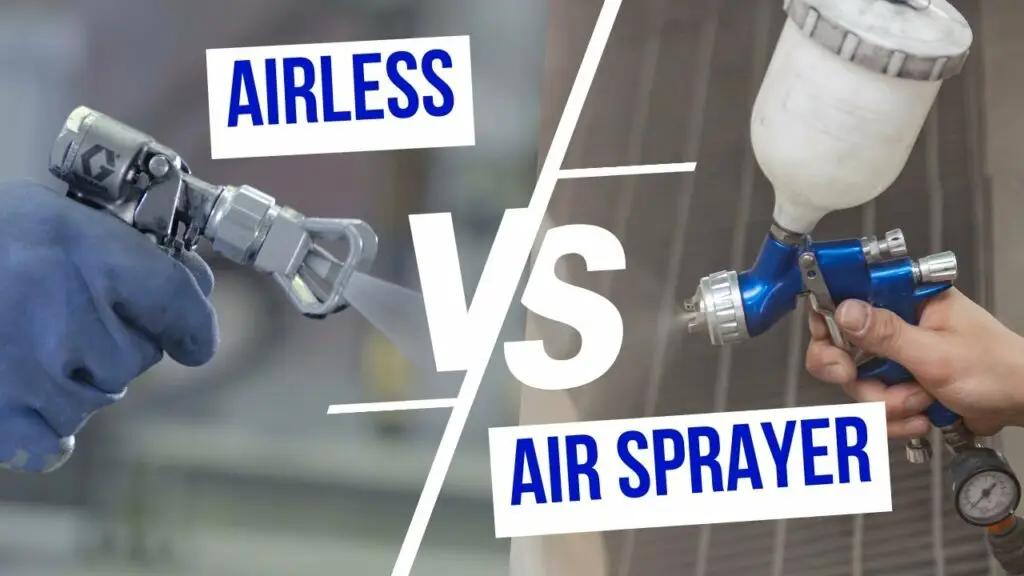
What is airless spraying?
In airless spraying, paint is forced through a spray tip under high pressure without added air. This creates a spray that is applied directly to the surface.
Advantages of airless spraying
- Fast application: airless spraying is very quick and ideal for large surfaces such as walls and ceilings.
- Even finish: high pressure distributes the paint evenly, without streaks or bands.
- Efficient paint use: controlled application helps reduce waste.
Drawbacks of airless spraying
- More overspray: more airborne paint is produced, making thorough preparation and surface protection essential.
- Less suitable for fine detail: accurately spraying small areas or intricate patterns can be difficult.
What is air-assisted spraying?
Air-assisted spraying uses air to help atomise paint at lower pressure. It combines features of airless spraying and conventional air spraying.
Advantages of air-assisted spraying
- Fine control: the added air makes this technique well suited to detailed work.
- Less overspray: compared with airless spraying, it produces less overspray and reduces cleaning.
- Suitable for complex surfaces, including furniture, frames and decorative features.
Drawbacks of air-assisted spraying
- Slower than airless spraying: application takes longer, particularly over large areas.
- Higher cost: the more complex equipment can require a larger investment.
The main differences between airless and air-assisted spraying
| Feature | Airless spraying | Air-assisted spraying |
|---|---|---|
| Technique | High pressure, without air | Lower pressure, with air assistance |
| Speed | Very fast | Slower |
| Finish | Smooth and even, especially on large areas | Suitable for detail and decorative work |
| Overspray | Relatively high | Lower |
| Complexity | Suitable for straightforward surfaces | Suitable for complex surfaces |
| Cost | Lower equipment costs | Higher initial equipment costs |
Which technique should you choose?
The choice between airless and air-assisted spraying depends on the type of project and the results you want to achieve.
Choose airless spraying for:
- Large surfaces such as walls and ceilings
- Smooth, even paintwork without too much detail
- Projects where speed, efficiency and a smooth finish are the priority
Choose air-assisted spraying for:
- Detailed projects such as furniture, window frames or decorative features.
- Projects where less overspray and finer control are required.
- More complex surfaces with many corners and edges.
Conclusion
Airless and air-assisted spray painting each have their own advantages and applications. For large, open surfaces, airless spraying is often the best choice thanks to its speed and efficient paint application. Air-assisted spraying excels at detailed work and complex surfaces.
Read more about the airless technique and our complete approach to professional wall spray painting.