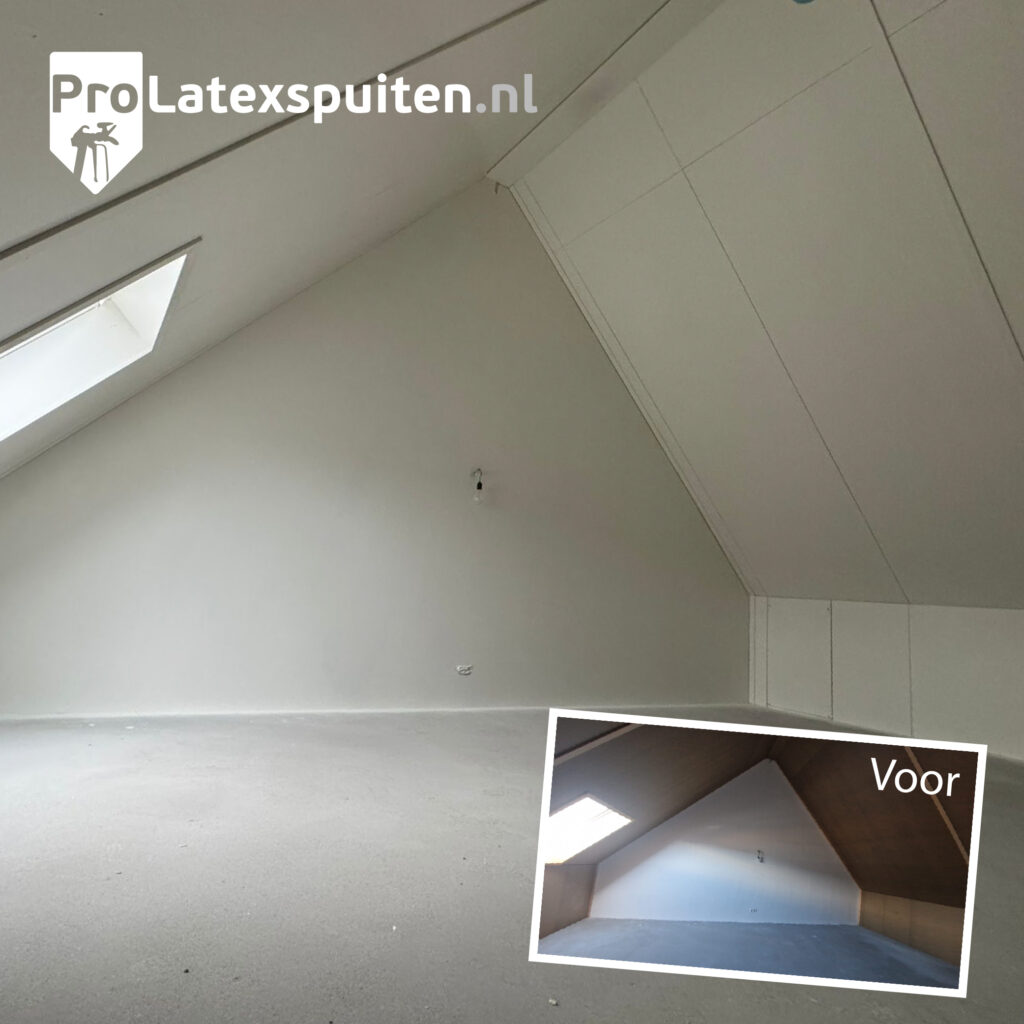
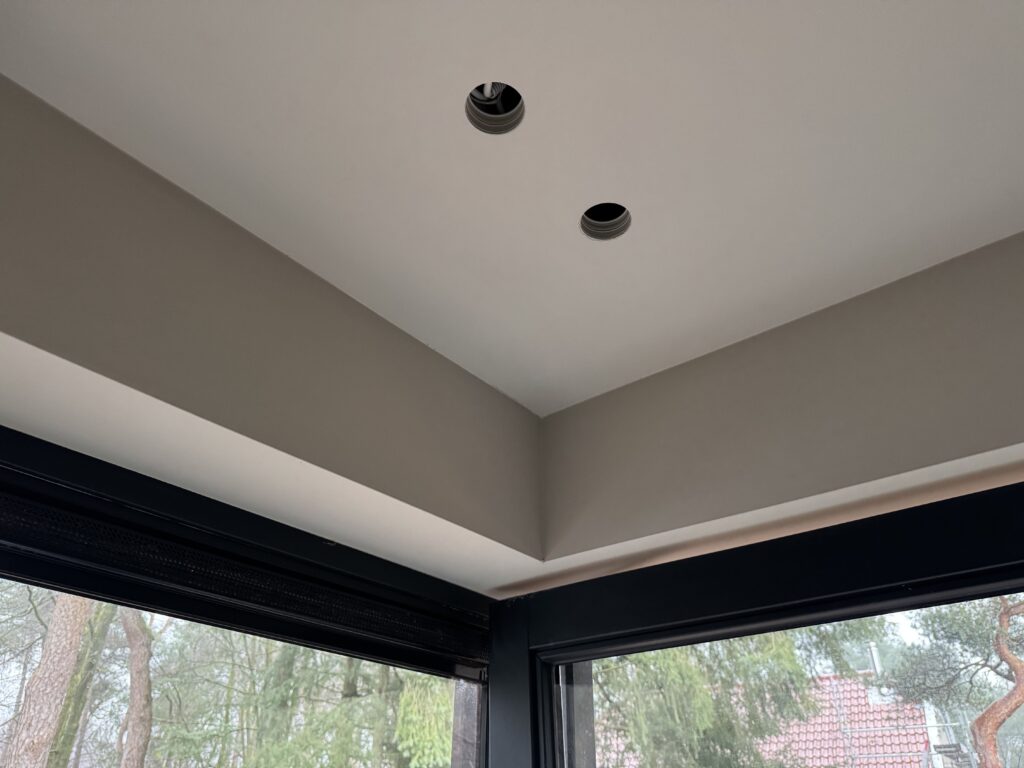
Spray painting new plaster creates a smooth, seamless finish. But before the sprayer comes out, one essential step must not be skipped: sanding the plaster. Newly plastered walls may look smooth, but appearances can be deceptive. This article explains why sanding is essential and how it improves the final spray-painted finish.
New plaster: smooth, but not perfect
A freshly plastered wall often looks smooth, but a closer inspection almost always reveals small imperfections:
• Trowel marks
• Grains of sand
• Small ridges or scratches
Once the paint is sprayed, these irregularities become immediately visible, especially in daylight or light falling across the surface. Spray painting applies a smooth, even coat, making the finish much less forgiving than traditional painting with a roller or brush.
The benefits of sanding before spray painting
1. A smooth, even finish
Sanding removes imperfections and creates a smooth surface. This prevents visible bumps, lines or dust particles beneath the paint.
2. Better paint adhesion
A lightly abraded surface helps the wall paint adhere better. This helps prevent peeling or flaking over time.
3. A professional appearance
Sprayed wall paint looks its best on a perfectly even wall. Sanding beforehand helps achieve the smooth finish you would expect in a new-build home or showroom.
Conclusion
If you invest in spray painting, you want a smooth, even result. That starts with proper preparation. Sanding is essential. It creates a smooth base, improves adhesion and gives a better finish. Always have this done by a professional who knows what to look for.
Want smooth walls without visible imperfections? It starts with proper preparation, which means sanding before spray painting.
Read our complete approach to preparing and spray painting new plaster.